[Case 01]

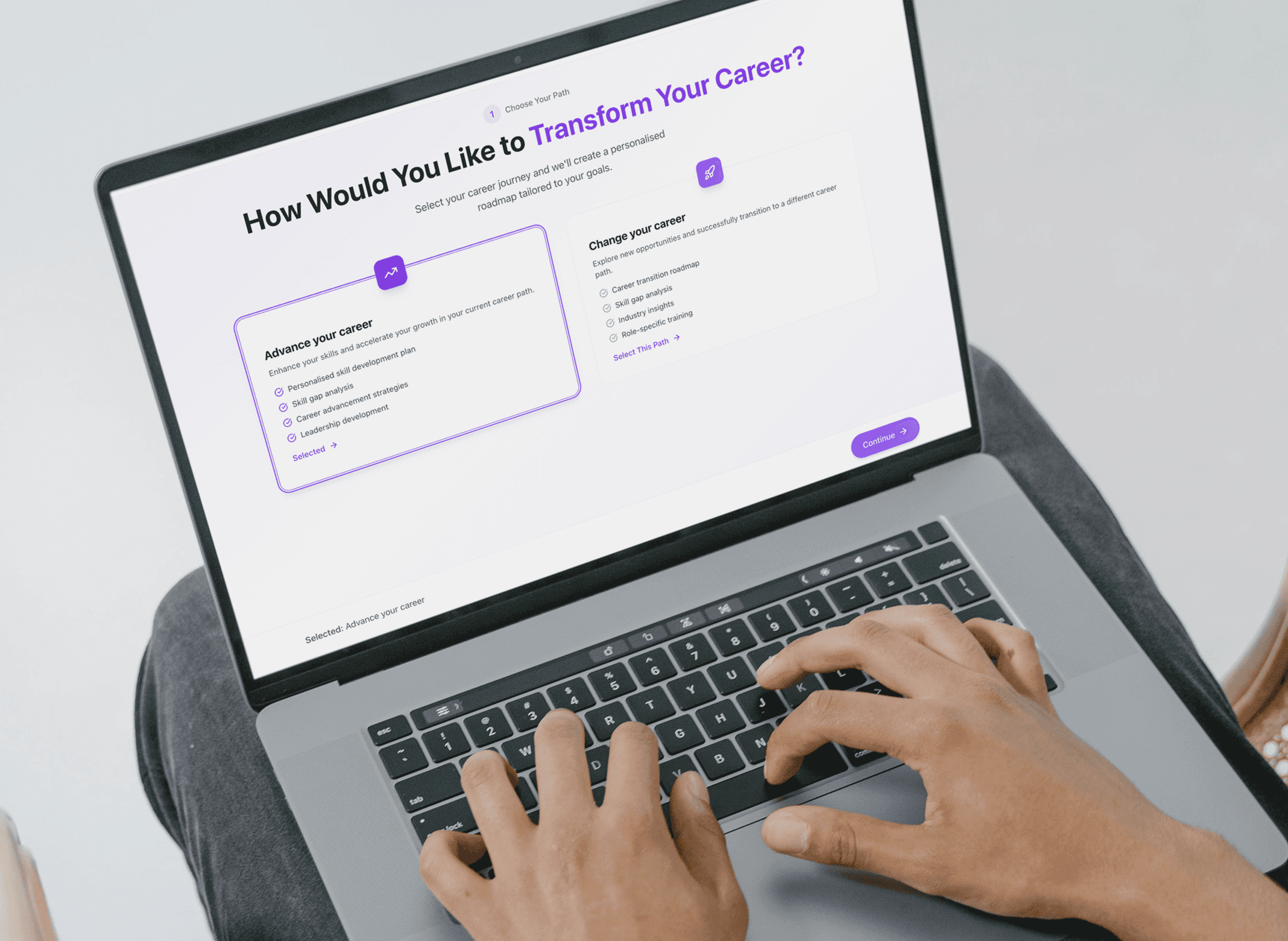
Shifting from content consumption to guided career progress.

Career Development
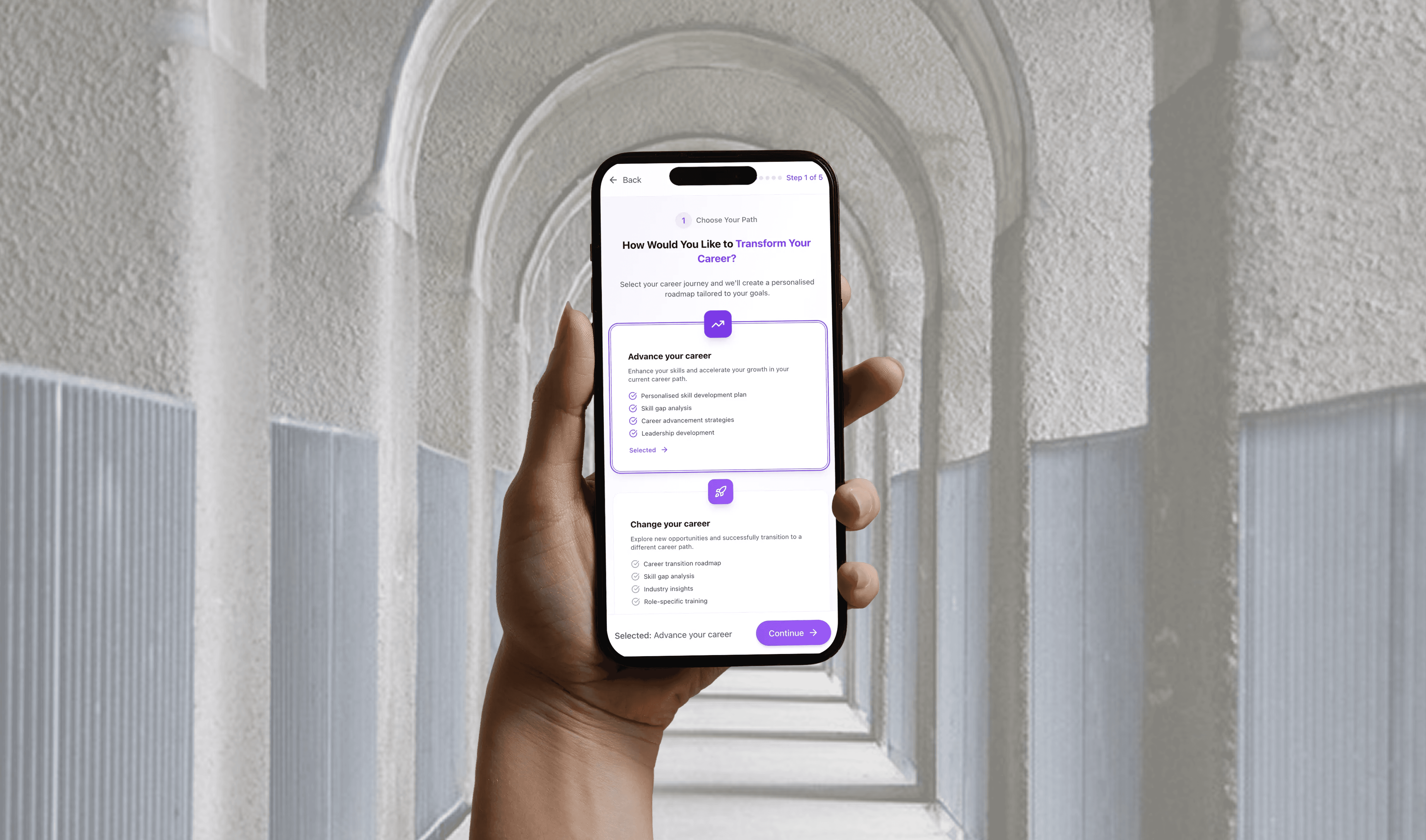
Midshift personalized learning path interface

Midshift: From Free Blog to AI Career Coach

Turning passive readers into active learners — one personalized step at a time.

[Overview]

Midshift started as a blog with free career roadmaps. It got traffic — but no one stayed. I led the redesign that turned it from a content site into an AI-powered career coach: an interactive system that doesn’t just tell people what to do — it guides them through it, step by step.

[Problem Statement]

Midshift was a content site that attracted readers but couldn’t keep them. People downloaded free career roadmaps and left — no onboarding, no guidance, no reason to return. We had traffic, but no product. The real issue wasn’t awareness — it was that passive content doesn’t create action.

[Industry]

Career Development

[My Role]

Lead Designer

[Platforms]

Desktop and Mobile

[Timeline]

January 2024- March 2024

[Persona]

Dan

Marketing Manager

Dan’s been in tech for 8 years—but in a non-design role. He’s now trying to transition into product design. He’s mid-career, time-poor, and skeptical of “learn everything” platforms.

Age: 29

Location: United Kingdom

Tech Proficiency: Moderate

Gender: Male

[Goal]

Find a clear, personalized path to switch careers — without getting lost in generic advice.

Feel confident taking the next step — even if it’s small.

Track progress so he knows he’s moving forward — not just reading.

[Frustrations]

Feels overwhelmed by choices. Doesn’t know which step to take first.

No way to track progress. Feels like he’s stuck in “research mode” forever.

Downloads a roadmap — then never opens it again. Too much info, no starting point.
[Process]

[01] First, I figured out why people left

Sent a targeted survey to 80 recent visitors who downloaded a roadmap but didn’t sign up.

Conducted user journey mapping of the existing flow — from blog click → PDF download → exit.

Performed competitive analysis of 6 career/learning platforms.

[01] First, I figured out why people left

Sent a targeted survey to 80 recent visitors who downloaded a roadmap but didn’t sign up.

Conducted user journey mapping of the existing flow — from blog click → PDF download → exit.

Performed competitive analysis of 6 career/learning platforms.

[01] First, I figured out why people left

Sent a targeted survey to 80 recent visitors who downloaded a roadmap but didn’t sign up.

Conducted user journey mapping of the existing flow — from blog click → PDF download → exit.

Performed competitive analysis of 6 career/learning platforms.

[02] Built the system around real behavior

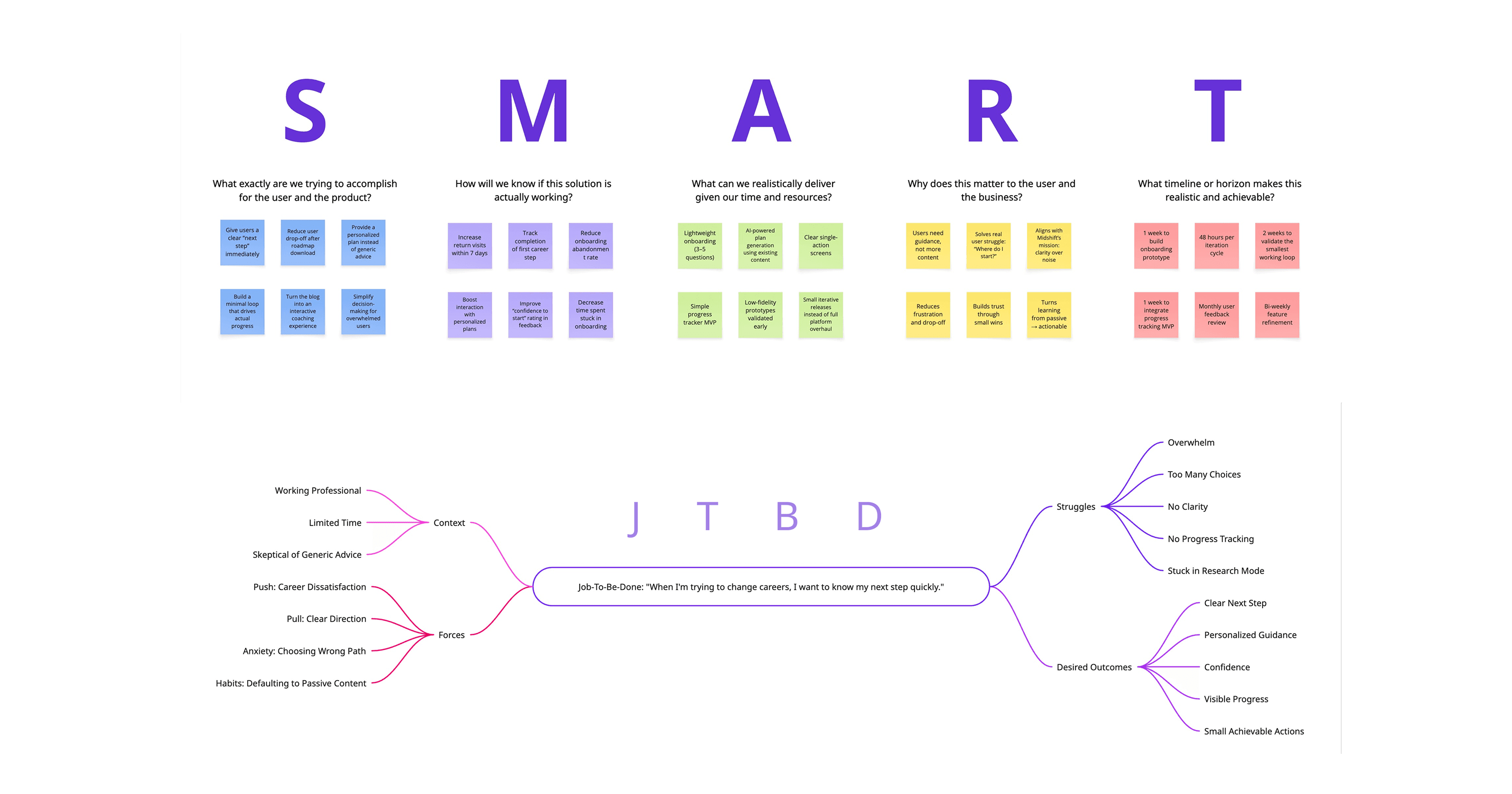
Used job-to-be-done (JTBD) framing to reframe the problem

Checked against Nielsen’s principles: visibility of system status, error prevention, minimalist design.

Noted hesitation points, workarounds, and moments of frustration.

[02] Built the system around real behavior

Used job-to-be-done (JTBD) framing to reframe the problem

Checked against Nielsen’s principles: visibility of system status, error prevention, minimalist design.

Noted hesitation points, workarounds, and moments of frustration.

[02] Built the system around real behavior

Used job-to-be-done (JTBD) framing to reframe the problem

Checked against Nielsen’s principles: visibility of system status, error prevention, minimalist design.

Noted hesitation points, workarounds, and moments of frustration.

[03] Designed the smallest loop that could work

Used task analysis to break “complete a career step” into atomic actions.

Built low-fidelity interactive prototypes in Figma.

Defined core interaction patterns.

[03] Designed the smallest loop that could work

Used task analysis to break “complete a career step” into atomic actions.

Built low-fidelity interactive prototypes in Figma.

Defined core interaction patterns.

[03] Designed the smallest loop that could work

Used task analysis to break “complete a career step” into atomic actions.

Built low-fidelity interactive prototypes in Figma.

Defined core interaction patterns.

[04] Tested early

Conducted unmoderated usability testing (via Maze) with first prototype.

Ran A/B concept testing between two onboarding approaches:

Used feedback-driven iteration.

[04] Tested early

Conducted unmoderated usability testing (via Maze) with first prototype.

Ran A/B concept testing between two onboarding approaches:

Used feedback-driven iteration.

[04] Tested early

Conducted unmoderated usability testing (via Maze) with first prototype.

Ran A/B concept testing between two onboarding approaches:

Used feedback-driven iteration.

[Outcome]

Users finally took real steps — not just downloaded PDFs — because the system told them exactly what to do next.
People came back — not for more content, but to track their progress. The platform became a tool, not a one-time download.
Mobile drop-off disappeared — the flow became effortless, with clear actions and no hidden steps.

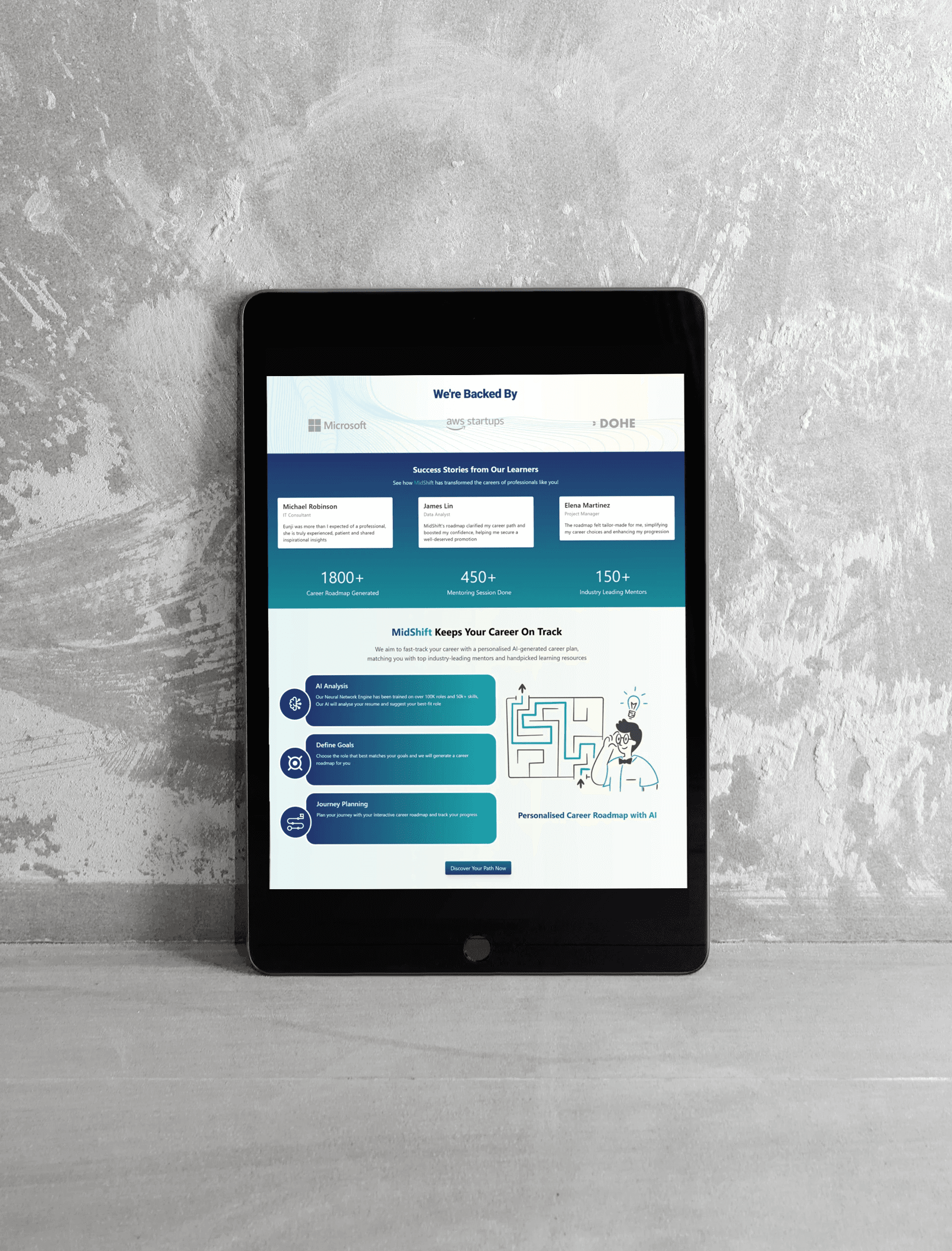
[Before]

Midshift was a blog with free career roadmaps. People would land, grab a PDF, and leave. No onboarding. No progress tracking. No reason to come back. It felt like a library — full of books, but no one to tell you which one to read first.
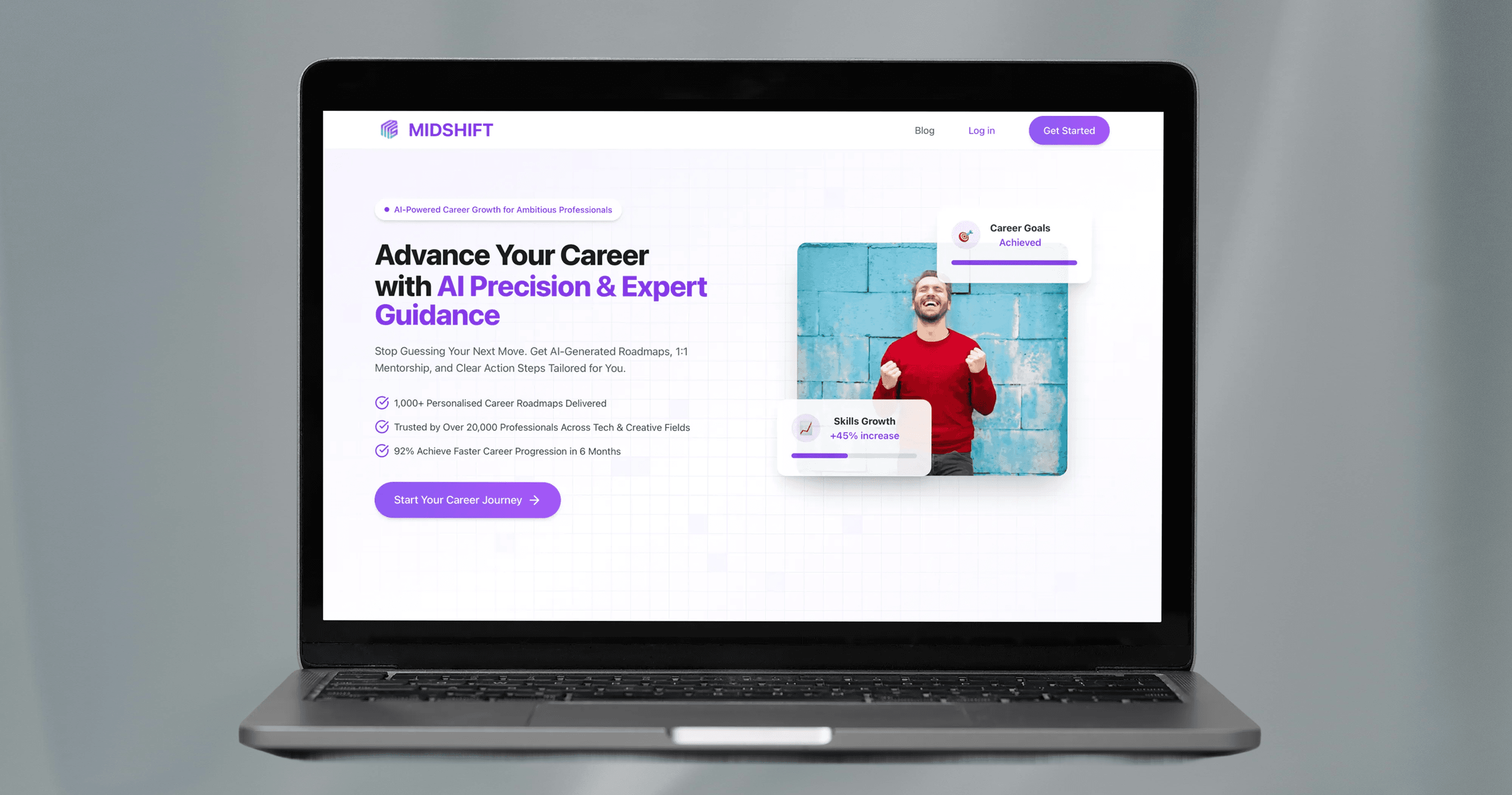
[After]

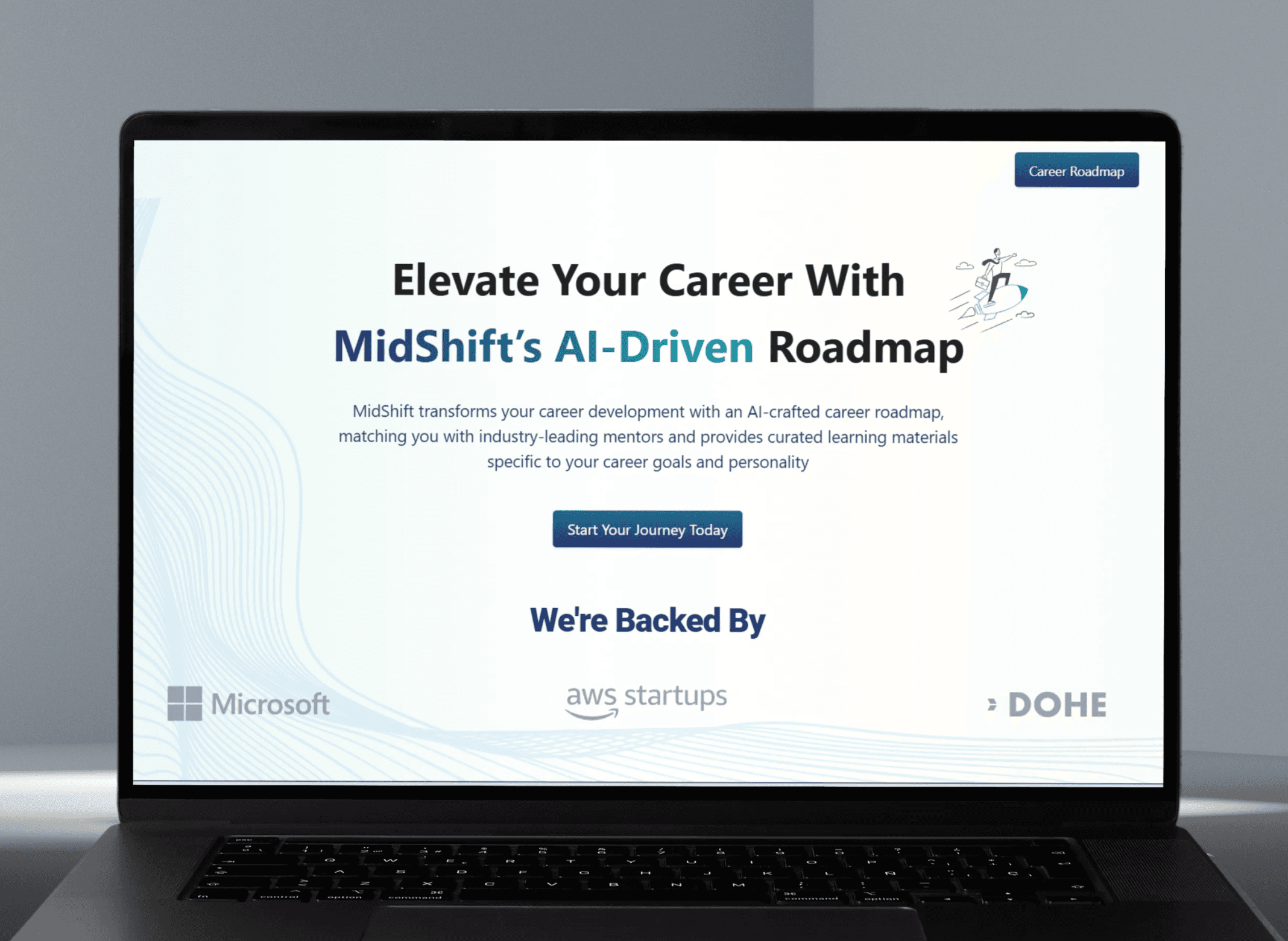
Now, Midshift is an AI career coach. You answer a few questions, get a personalized plan, and start taking steps — with progress tracked, reminders sent, and next actions clearly shown. It doesn’t just tell you what to do — it guides you through it, step by step. The PDFs are gone. The action is here.

[Key Learnings]

Simplicity is key

Users value a quick and easy process — especially on mobile. Don’t add features. Remove friction.

Simplicity is key

Users value a quick and easy process — especially on mobile. Don’t add features. Remove friction.

Simplicity is key

Users value a quick and easy process — especially on mobile. Don’t add features. Remove friction.

Iterative testing pays off

Regular testing uncovered hidden issues and ensured the design met user needs — not just our assumptions.

Iterative testing pays off

Regular testing uncovered hidden issues and ensured the design met user needs — not just our assumptions.

Iterative testing pays off

Regular testing uncovered hidden issues and ensured the design met user needs — not just our assumptions.

Details matter

Small improvements — like error validation and mobile optimization — had a significant impact on trust and completion.

Details matter

Small improvements — like error validation and mobile optimization — had a significant impact on trust and completion.

Details matter

Small improvements — like error validation and mobile optimization — had a significant impact on trust and completion.

Let’s talk about what you’re building

Whether it’s a quick question or a full project, I’m here.

Select this text to see the highlight effect